Granite Countertop Edges and Finishes: How to Choose a Look That Fits Your Kitchen
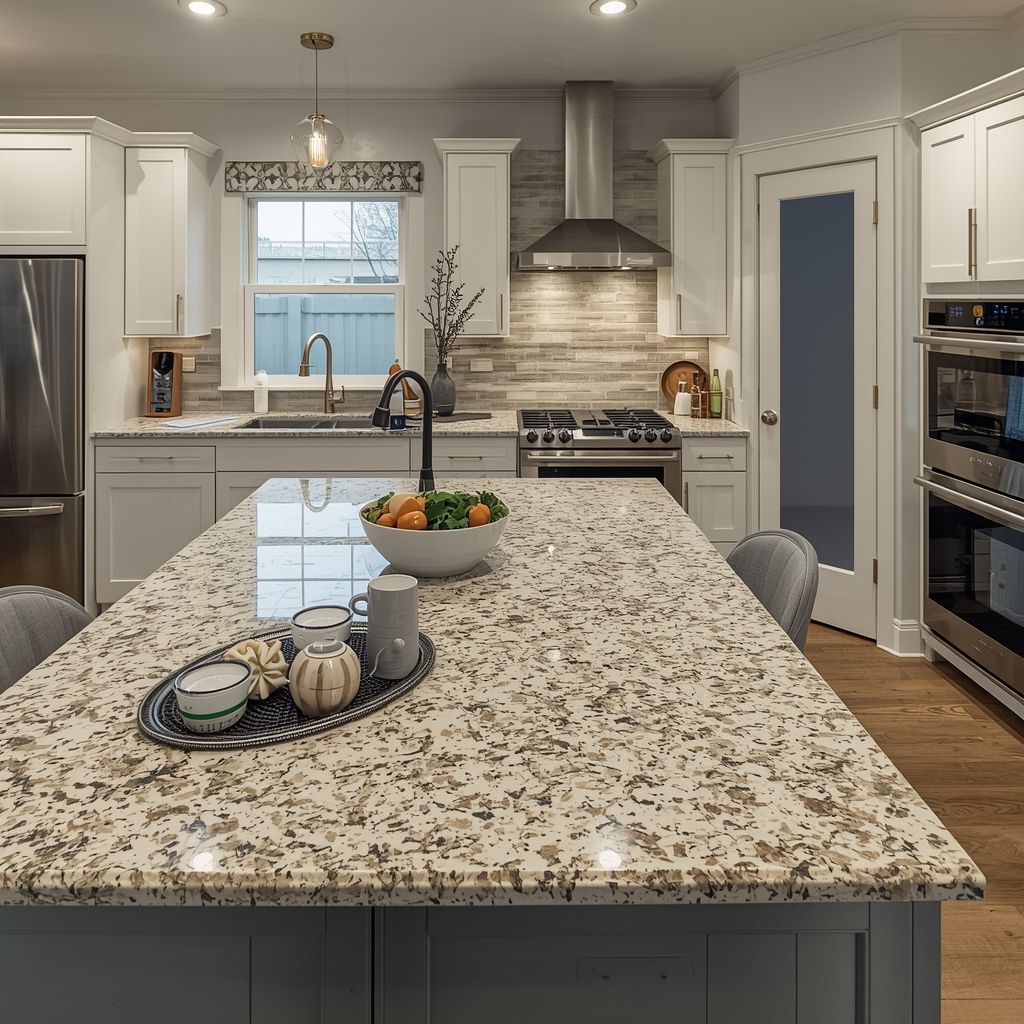
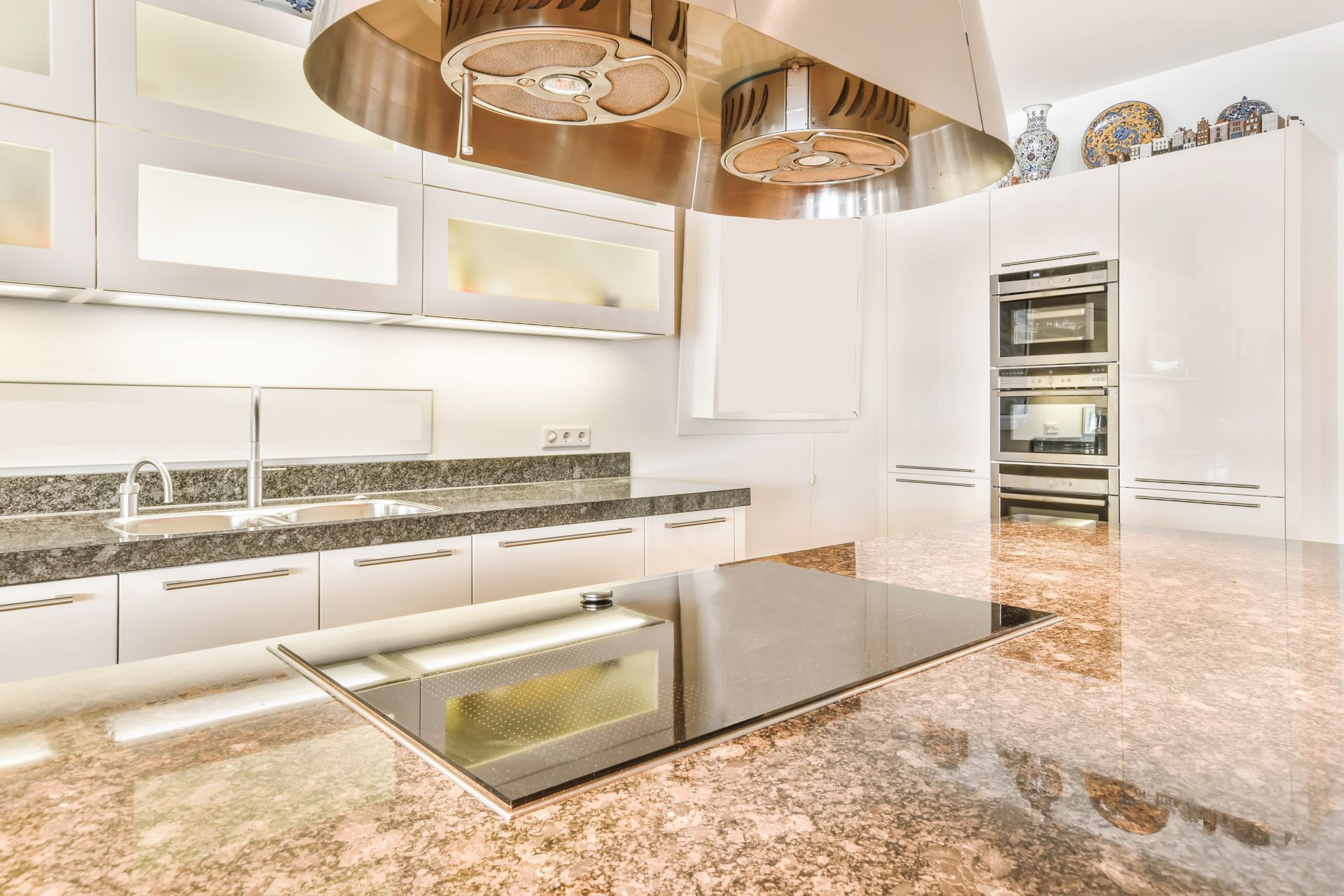
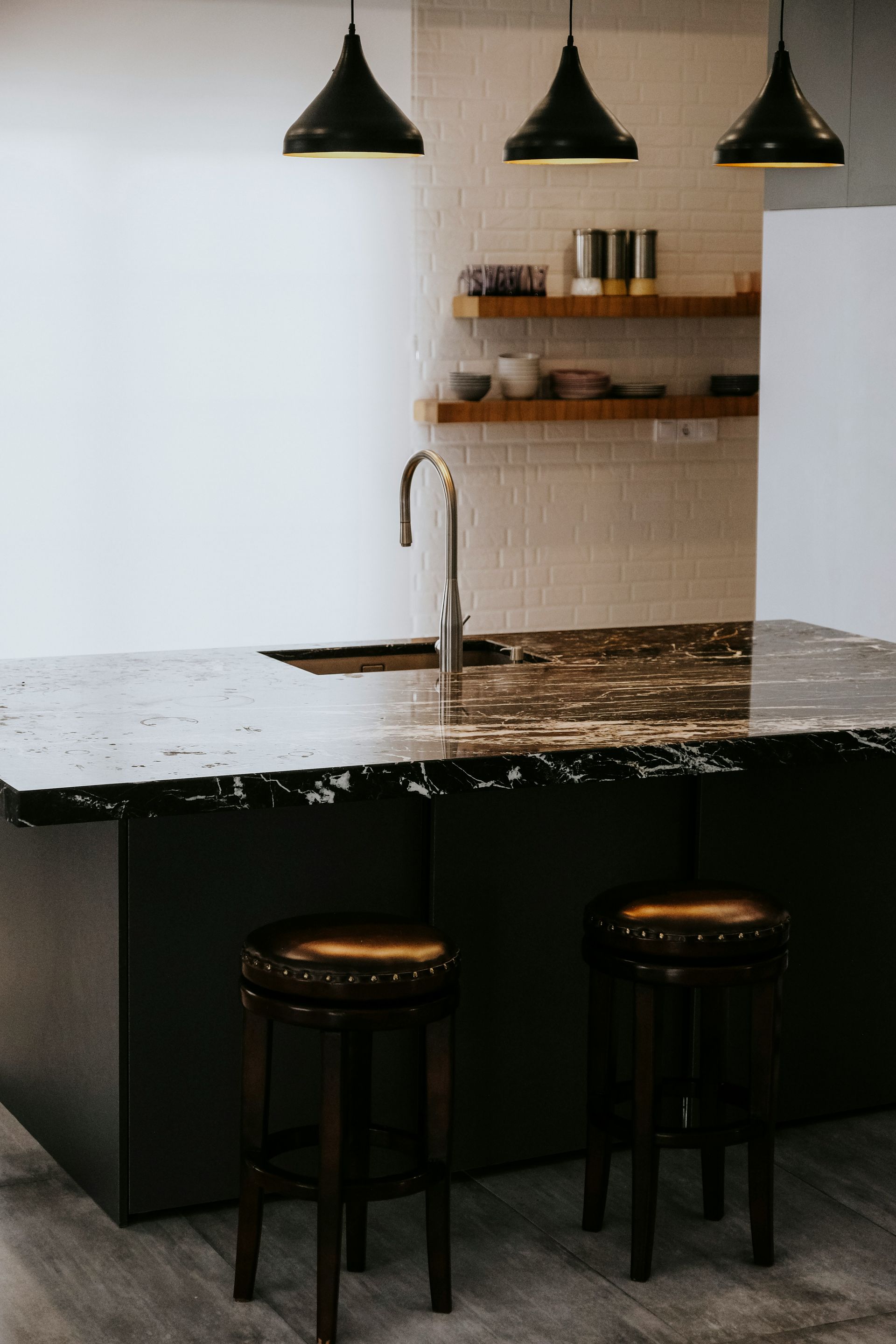
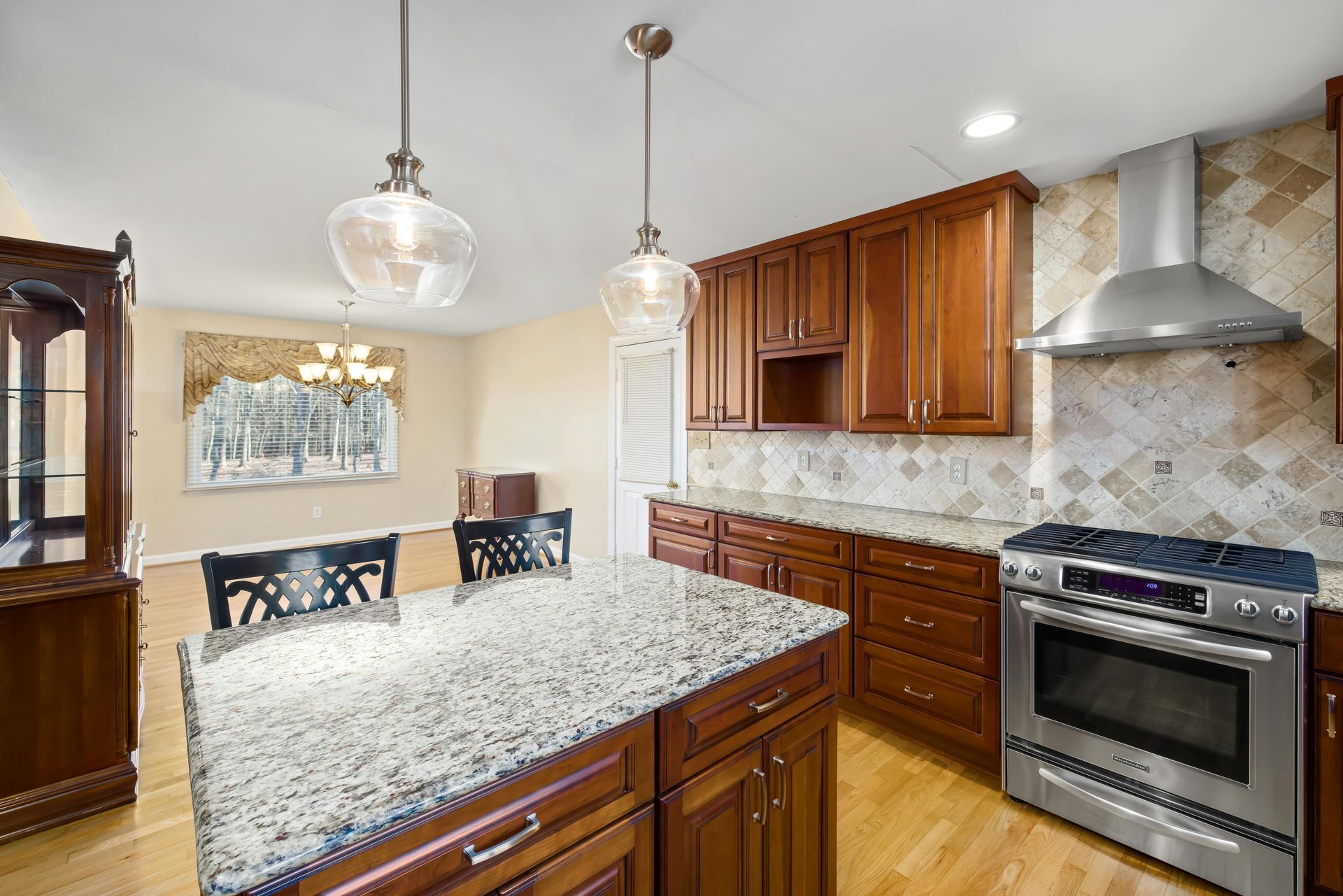
The edge and finish of a granite countertop influence how the stone looks, feels and functions every day. At Busche Granite, we help Hamilton homeowners make those choices after considering the slab, cabinet style, room size, maintenance preferences and how the surface will be used. A dramatic edge can become a feature on an island, while a simple profile may let strong veining or cabinetry take the lead. The best selection belongs to the whole kitchen rather than a sample viewed by itself.
Granite is a natural material, so colour, pattern and surface characteristics vary from slab to slab. Review the actual stone wherever possible before finalizing fabrication details. An edge profile changes how the slab thickness is perceived, and a finish changes how light interacts with the colour and mineral pattern. Samples are useful, but your slab and kitchen lighting provide the real context.
What is a countertop edge profile?
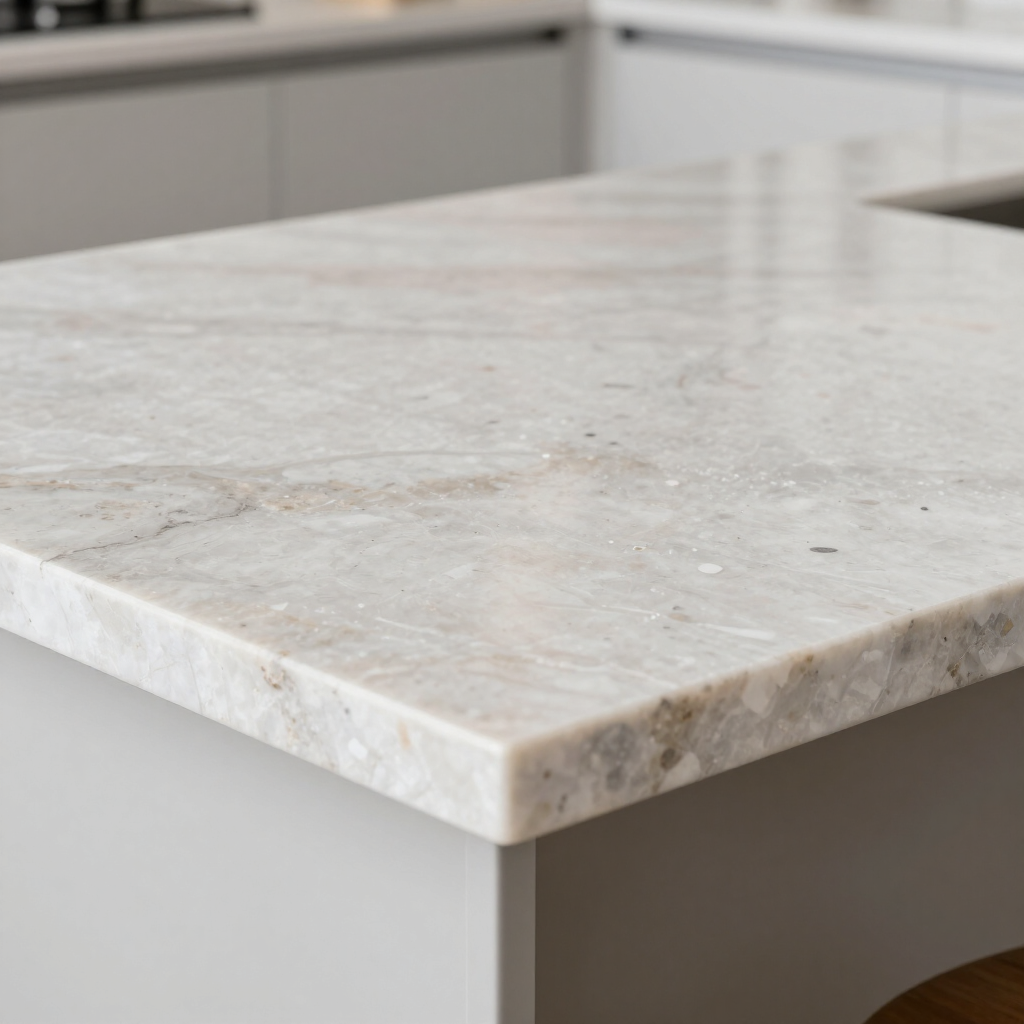
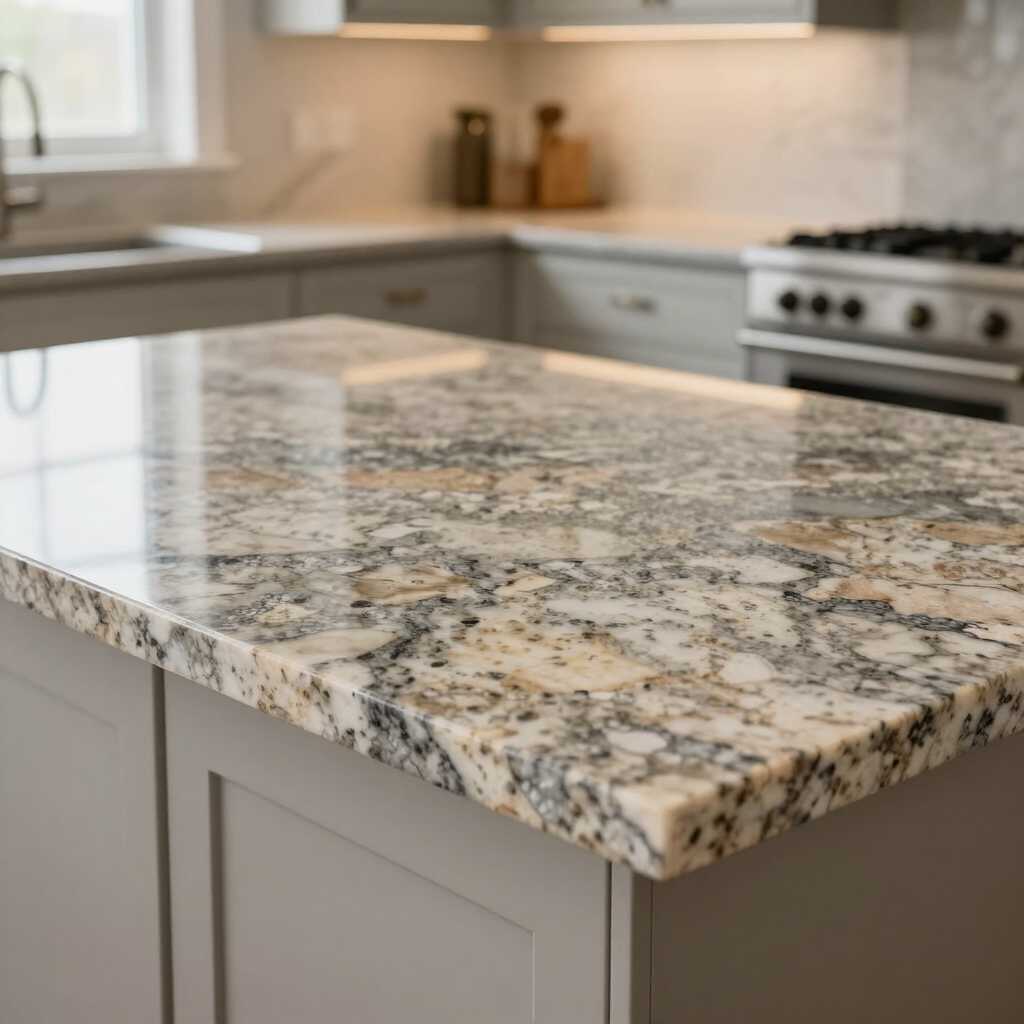
The edge profile is the shaped detail along the exposed perimeter of the countertop. Some profiles are straight and minimal; others use curves, bevels or multiple layers. The profile can make a slab appear thicker, soften a traditional kitchen or give a modern design a crisp line. Not every edge works equally well with every thickness, overhang or stone. The fabricator needs to consider structural requirements, seams, sink openings and the details of the slab. Ask which profiles are suitable for the selected material and layout before becoming attached to a photograph from another project.
Simple eased and straight-style edges
An eased edge has a generally straight appearance with slightly softened corners. It suits contemporary, transitional and many traditional kitchens because it does not compete with other design elements. The softened corner is more comfortable than a perfectly sharp line and can be practical in busy spaces.
A simple profile often highlights the granite itself. If the slab has bold movement, rich mineral variation or a carefully matched backsplash, an understated edge keeps attention on those features. It can also create visual consistency across a perimeter and island.
Bevelled edges
A bevel introduces an angled cut along the upper edge. The angle catches light and adds a defined detail without the complexity of a deeply ornamental profile. It can bridge modern cabinetry and more traditional materials. The width and proportion of the bevel affect the result. A narrow bevel reads as subtle; a larger one becomes more prominent. View a physical sample next to the cabinet door and stone because photographs can make the angle look stronger or weaker than it will in the room.
Bullnose and rounded profiles
A bullnose edge uses a rounded shape, while a half-bullnose rounds part of the edge and leaves another portion straighter. Curves can soften the appearance of a kitchen and feel comfortable where people lean against an island or pass through a narrow walkway. Rounded edges do not eliminate the possibility of stone damage, and every edge still needs reasonable care. The visual effect can also make the slab seem thinner or more flowing. Consider whether that complements the cabinet style and the amount of stone visible in the design.
Ogee and decorative edges
An ogee typically combines concave and convex curves for a more traditional, furniture-like appearance. It can work beautifully on a formal island, a classic kitchen or a vanity intended to feel decorative. Because the profile draws attention, it should be balanced with the door style, hardware and stone pattern. Decorative edges can require more fabrication and may collect dust in their contours more readily than a simple eased edge. Ask about cost, cleaning and suitability for the chosen slab. Using an ornate profile on one feature surface and a simpler profile elsewhere can create emphasis without overwhelming the room.
Mitered and built-up looks
A mitered edge joins pieces to create the appearance of a thicker slab or a waterfall-style continuation. It is a fabrication detail that must be planned around stone pattern, support and the cabinet or island design. When well executed, it can create a substantial, modern look. The seam and vein alignment deserve careful discussion, especially with directional granite. A thicker-looking edge also changes proportions: it may suit a large island but feel heavy in a compact kitchen. Review drawings and samples with the fabricator rather than relying on inspiration photos alone.
What is a countertop finish?
The finish describes the treatment of the broad stone surface. A polished finish is smooth and reflective, while honed and textured finishes interact with light differently. The finish influences colour depth, tactile quality, cleaning and the visibility of fingerprints or marks. Availability can depend on the granite and supplier. A finish shown online may not be appropriate or stocked for your selected slab. Confirm the exact material and view a representative sample before approving the surface treatment.
Polished granite
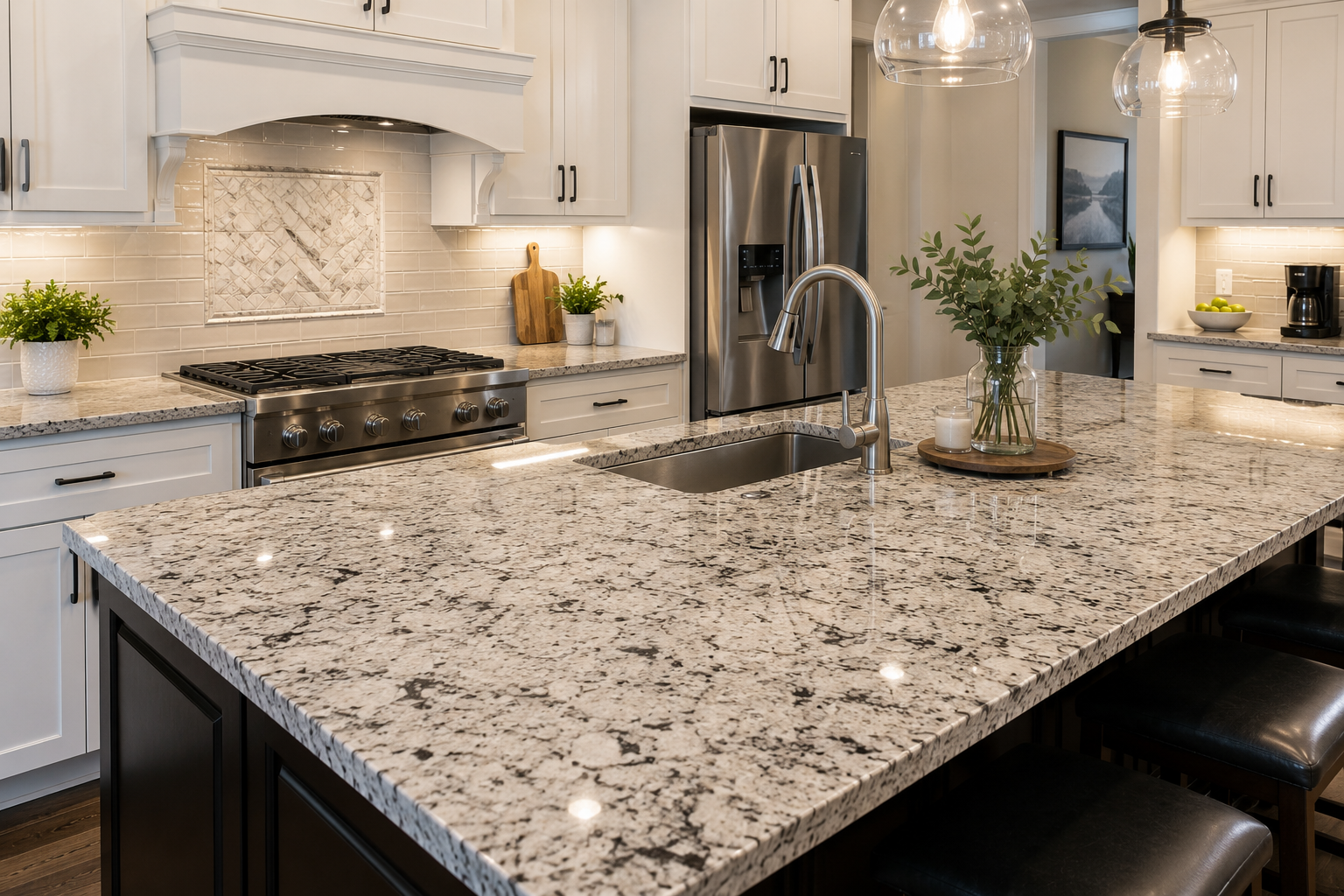
Polishing typically produces a smooth, reflective surface that deepens colour and highlights crystals and pattern. It is familiar in kitchens and can make darker stone appear rich and luminous. Reflections may also emphasize lighting and make the surface feel formal. A polished surface can show fingerprints, crumbs, streaks or hard-water marks depending on colour and light. That does not make it impractical; it simply affects daily appearance and cleaning habits. Use products and methods recommended for natural stone rather than abrasive or acidic cleaners.
Honed granite
A honed finish is smoother and less reflective, creating a matte or satin effect. It can soften strong colour and fit understated, contemporary or old-world interiors. Because light does not bounce in the same way, the stone may look lighter or more muted than a polished version of the same material. Honed surfaces can show oils, fingerprints or uneven darkening differently. Sealing and care recommendations depend on the stone and use. Ask to see how the finish behaves on the selected granite and understand the maintenance before choosing it solely for the look.
Textured finishes
Leathered and other textured finishes add tactile character and reduce a mirror-like reflection. They can emphasize the natural feel of stone and work well in designs that combine wood, metal and organic materials. Texture varies, so one sample should not be treated as representative of every granite. The surface may require a different cleaning technique because texture creates small variations. Discuss food-preparation use, sealing and availability. A textured island can be an effective feature, but it should still meet the household's expectations for daily care.
How lighting changes the decision
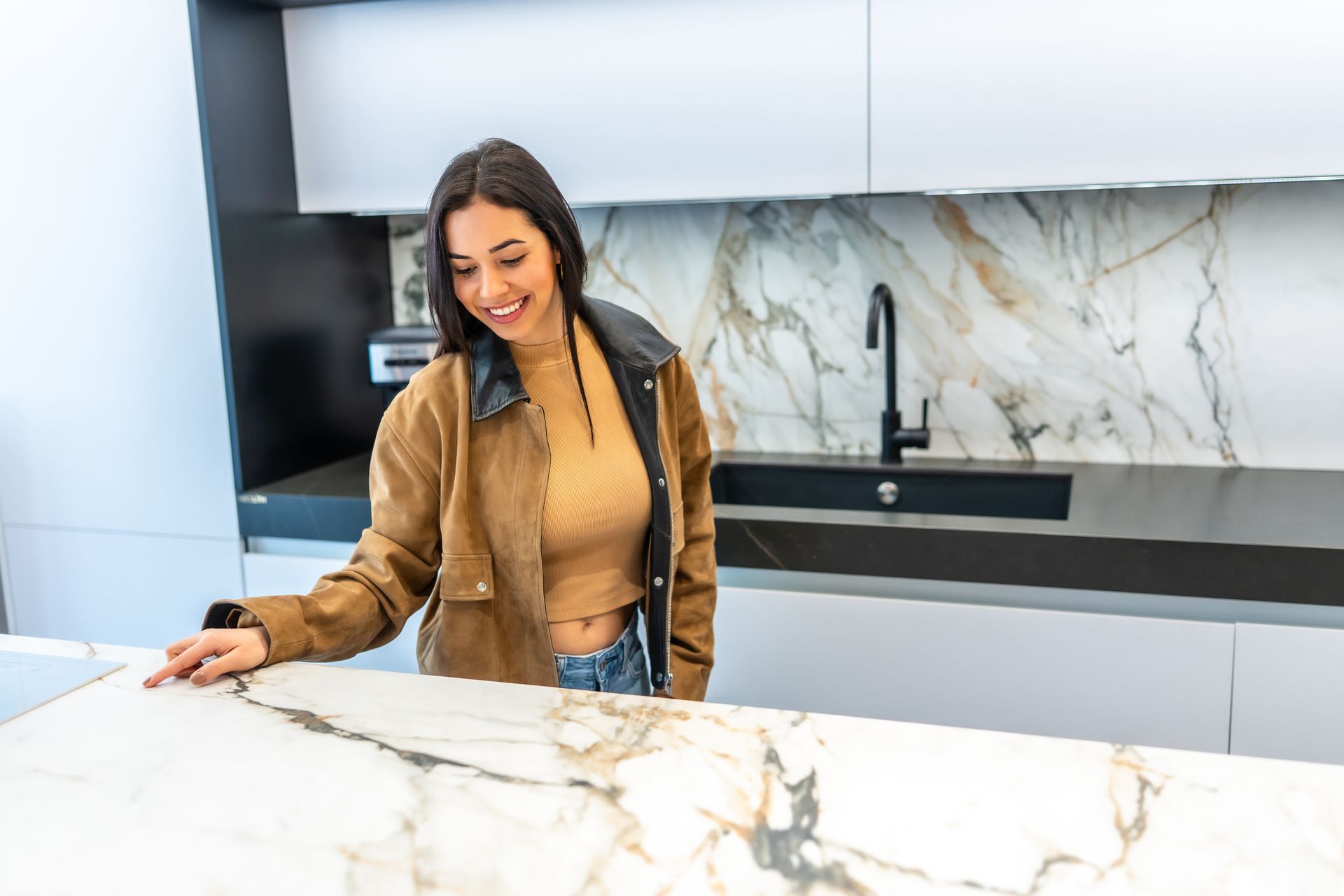
Showroom, daylight and evening lighting can make the same granite appear different. Polished surfaces reflect windows and fixtures, while honed surfaces diffuse light. Under-cabinet lighting may reveal mineral details that are less obvious in a warehouse. Bring cabinet, flooring, backsplash and paint samples when reviewing slabs. If possible, view the stone in more than one lighting condition. Consider where pendants reflect on an island and whether a highly reflective surface supports the atmosphere you want.
Match the edge to cabinet style
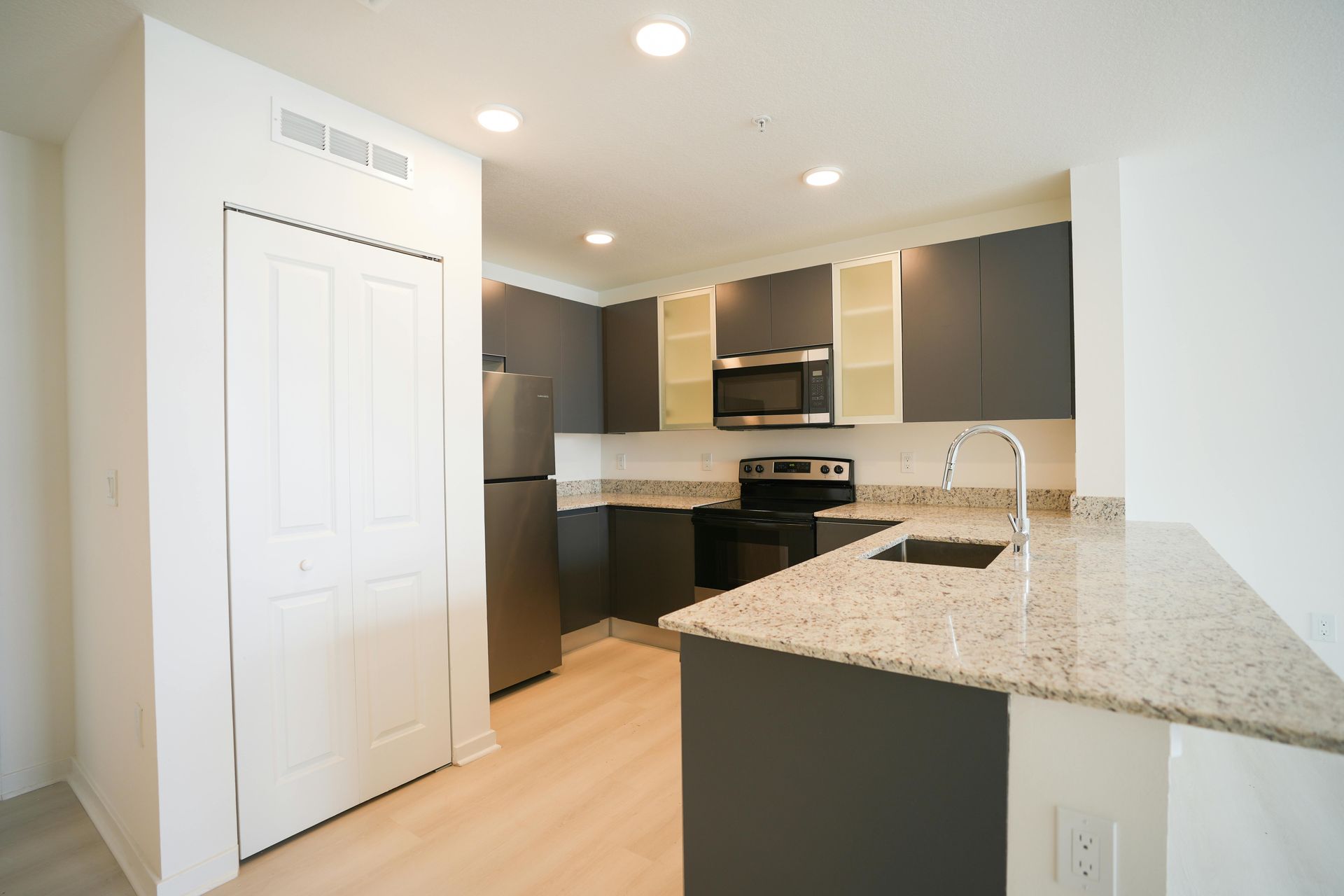
Flat-panel cabinets often pair naturally with simple eased, bevelled or mitered edges. Shaker cabinetry can work with restrained or softly rounded profiles. Raised-panel and traditional cabinets can support more decorative edges, provided the room does not become visually busy. These are guidelines, not rules. Contrast can be intentional. A simple edge can modernize traditional cabinets, and a carefully chosen curve can soften a contemporary room. Look at the complete elevation, including hardware and backsplash, rather than matching labels.
Think about the kitchen's scale
Large islands can visually carry a thicker or more detailed edge. In a narrow galley, a heavy built-up profile may reduce the sense of openness. The number of exposed edges also matters: a decorative profile repeated around many corners becomes more dominant than the same detail on one island. Measure walkways and note where people sit. The edge should look proportional from both standing and seated views. A waterfall or mitered feature affects the side of the island as much as the top, so include adjacent rooms in the decision.
Safety and comfort considerations
Soften exposed corners in busy walkways and households with children, while recognizing that no stone edge is impact-proof or child-proof. An overhang and seating area need proper support and comfortable knee clearance. Do not choose a profile that interferes with cabinet doors, appliance panels or intended seating.
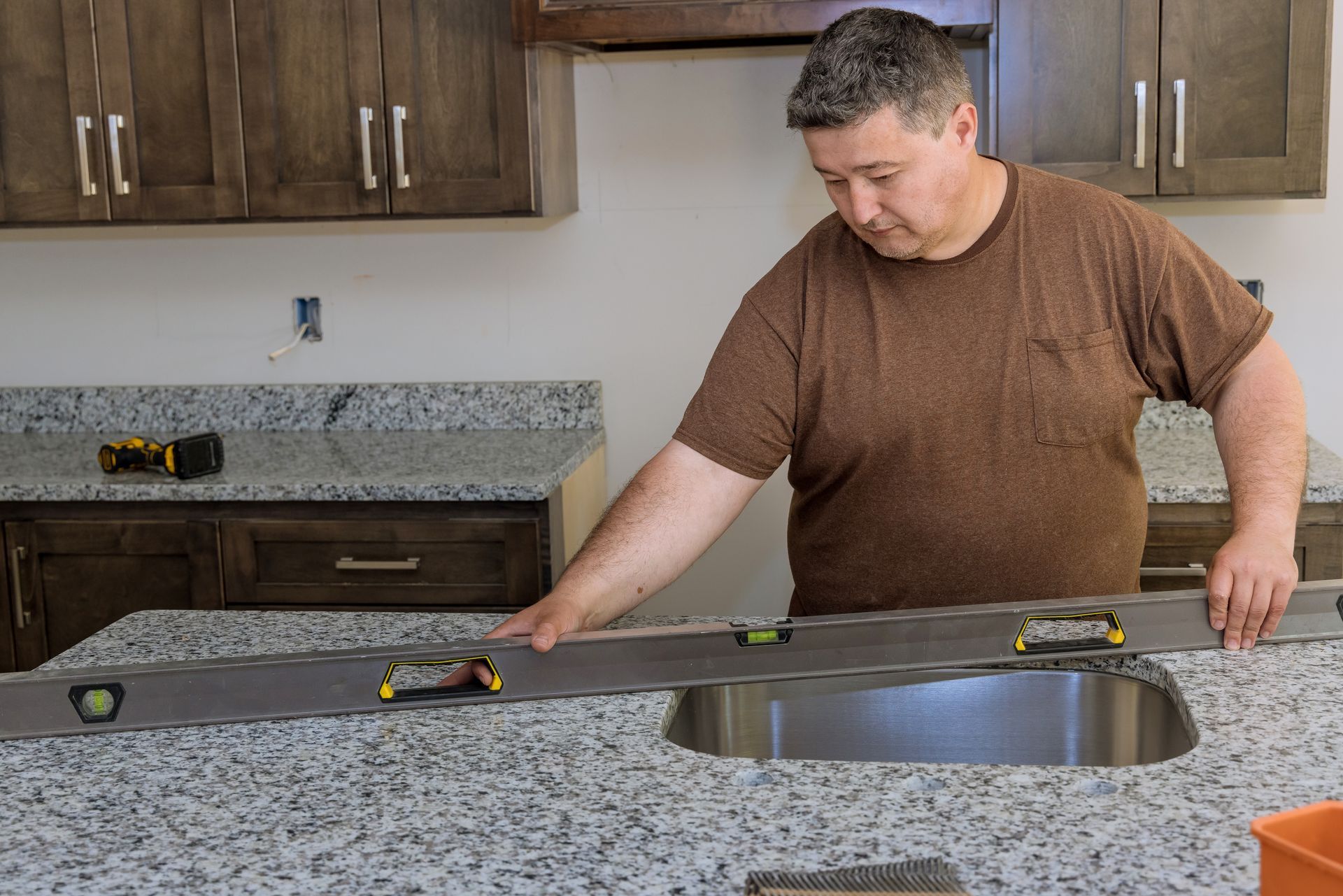
Discuss unsupported spans, brackets and overhangs with the fabricator and cabinet installer. Structural decisions should be based on the layout and material, not a visual preference. The countertop relies on level, suitable cabinetry and accurate site conditions.
Plan sinks, seams and backsplashes together
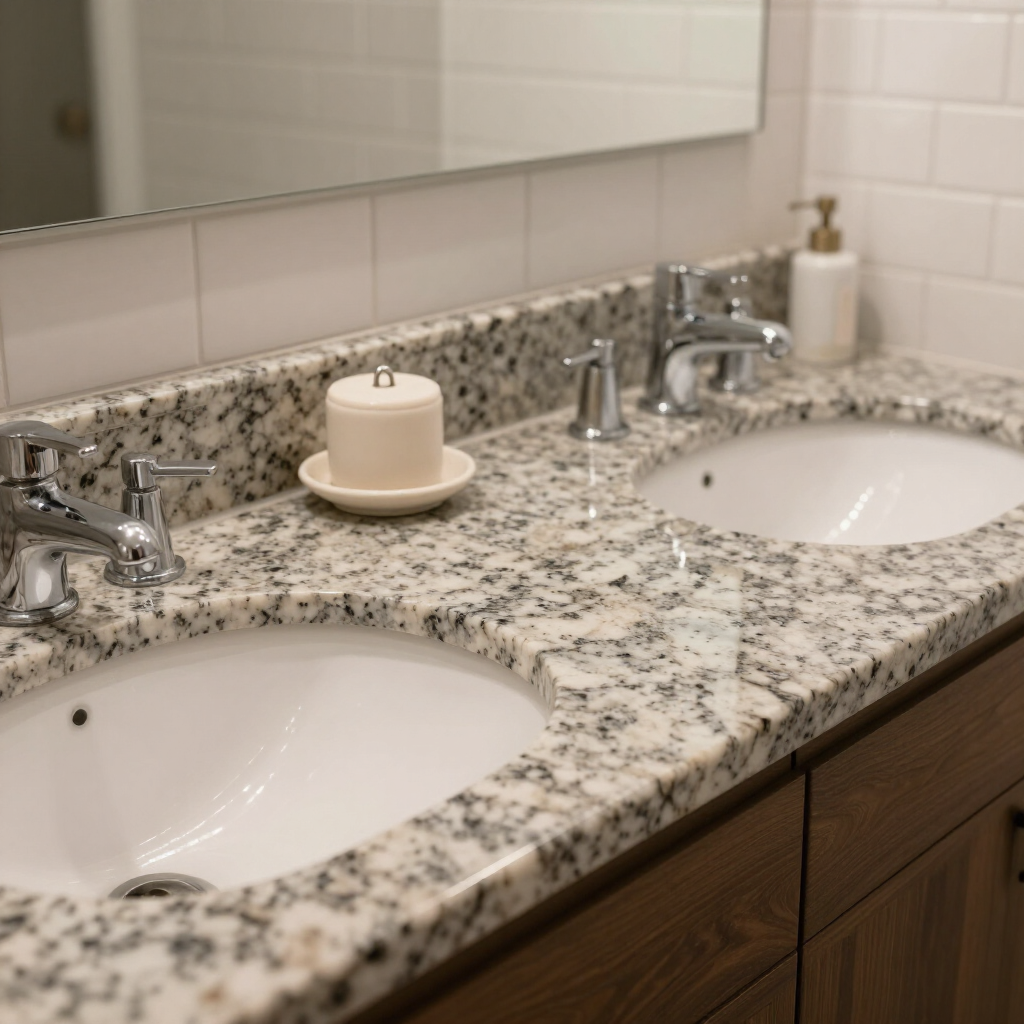
The edge near a sink, cooktop or seam needs to work with the fabrication plan. An under mount sink introduces another finished stone edge at the opening. Decide how that edge will relate to the perimeter profile. Faucet placement, soap dispensers and backsplash thickness also affect the template. Seam locations are planned around slab size, access, support and pattern. A complex edge can make some seam details more noticeable. Ask to review the proposed layout and how prominent veining will continue across sections.
Care and maintenance
Clean granite with products appropriate for natural stone and wipe spills promptly. Avoid harsh abrasives that can damage the finish. Sealing needs vary by stone, finish and product; follow the fabricator's guidance rather than a universal calendar found online. Edges are more exposed to impacts from heavy pots and appliances. Lift objects instead of striking or dragging them against the edge. A rounded profile may feel less sharp, but it can still chip under sufficient impact. If damage occurs, ask a stone professional whether repair is possible.
Budget for fabrication choices
Some edge profiles are included within a standard fabrication scope, while intricate or built-up details can add labour and material. Special finishes may affect slab availability or pricing. Request an estimate that identifies the edge, finish, cutouts, seams and installation assumptions. Do not select the lowest edge price without considering the years you will see and touch it. At the same time, an expensive decorative profile does not automatically improve a kitchen. Invest where the detail supports the design.
A useful selection process
First, choose the slab and confirm its available finishes. Second, review cabinet elevations, countertop thickness and exposed edges. Third, shortlist two or three profiles that suit fabrication requirements. Fourth, compare full-size samples with cabinet and backsplash materials. Finally, confirm cost, seam plan, maintenance and installation details in writing. Take photographs from normal viewing distance, not only close-ups. A tiny sample may make a decorative edge seem subtle when it becomes strong across a long island. Include all household decision-makers before fabrication, because changing an edge after cutting is not a simple revision.
Choose the detail that belongs in your kitchen
Granite countertops should feel connected to the cabinets, lighting, layout and way your household lives. At Busche Granite, we help clients compare slabs, finishes and edge profiles with fabrication realities in mind. Visit us to explore granite countertops in Hamilton and bring your cabinet and backsplash samples. Together, we can shape a surface that looks intentional from the first sketch through installation.